Concept Maps
Visual Diagrams & Cycles · 3 maps
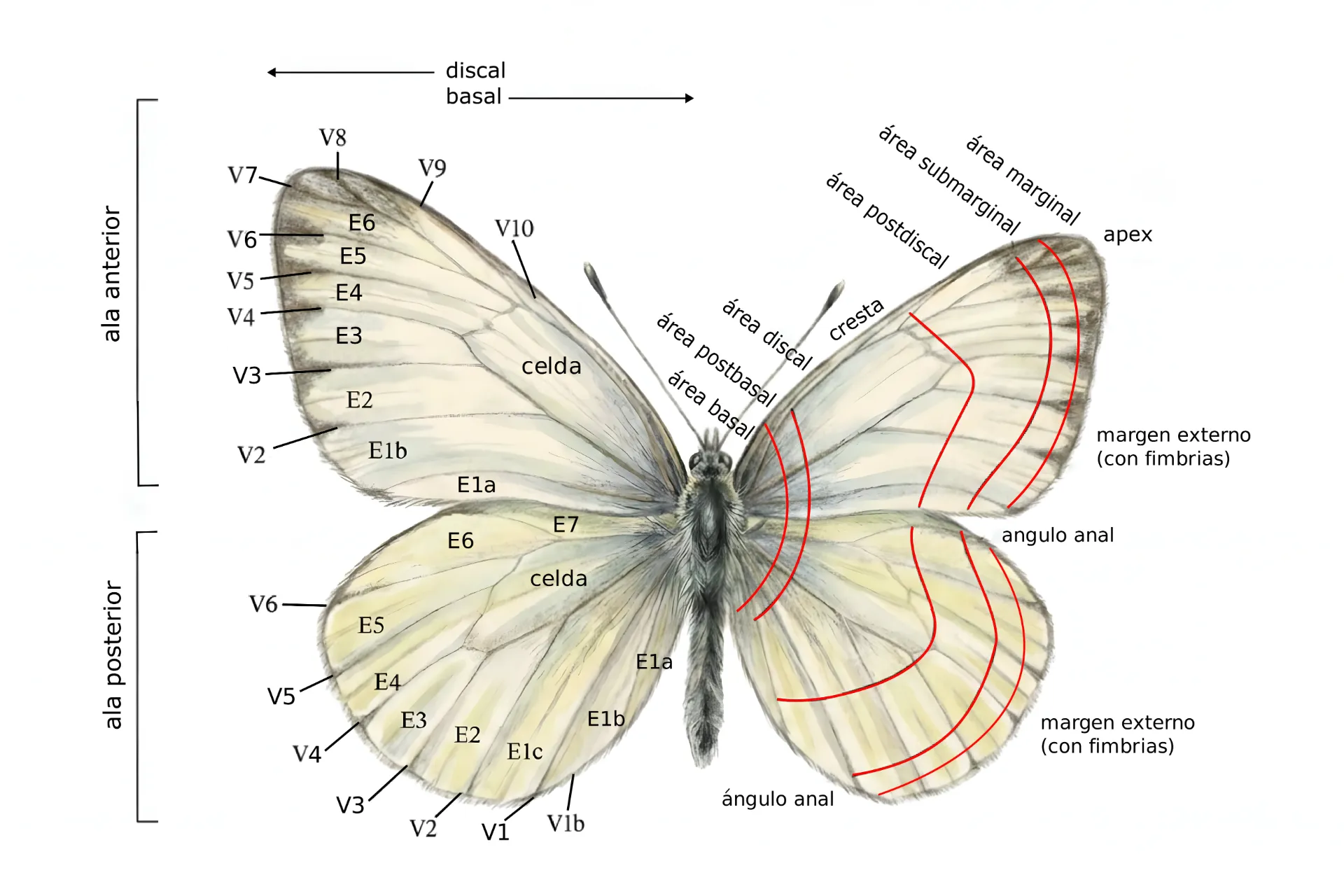
Butterfly wing map
A map showing the veins and parts of a butterfly's wings. The left wing indicates the nomenclature of the spaces and veins; these vary slightly between families, extending up to vein V12. Veins V1b, V5, V7, or V8 may also occasionally be absent. The right wing shows the parts of the wing margins.
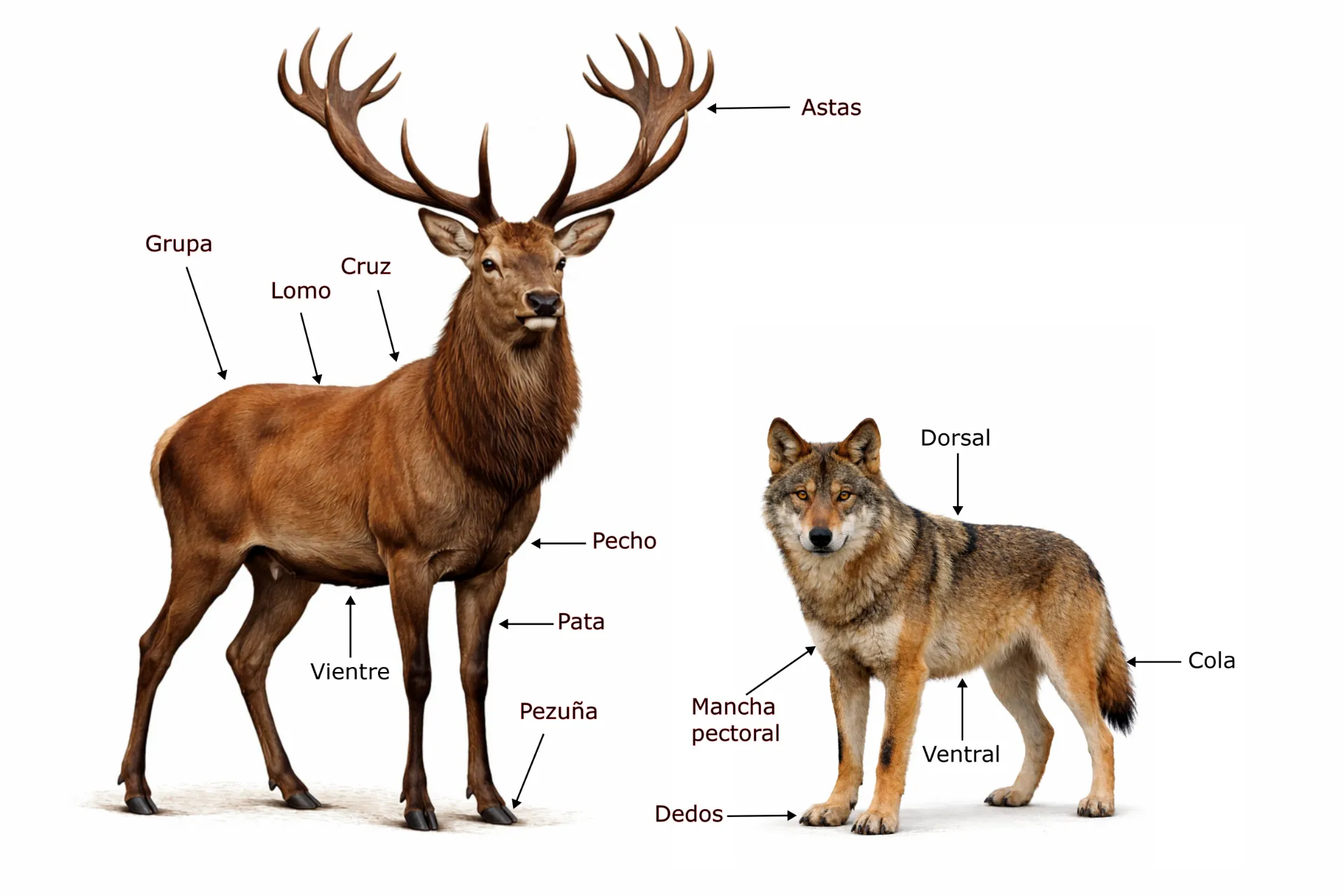
Map of the parts of mammals
Map of the main external anatomical parts of a mammal. The figure shows the nomenclature of the different body regions. The nomenclature may vary slightly between groups of mammals due to their anatomical differences and adaptations, with some structures possibly being reduced, modified, or absent depending on the species.
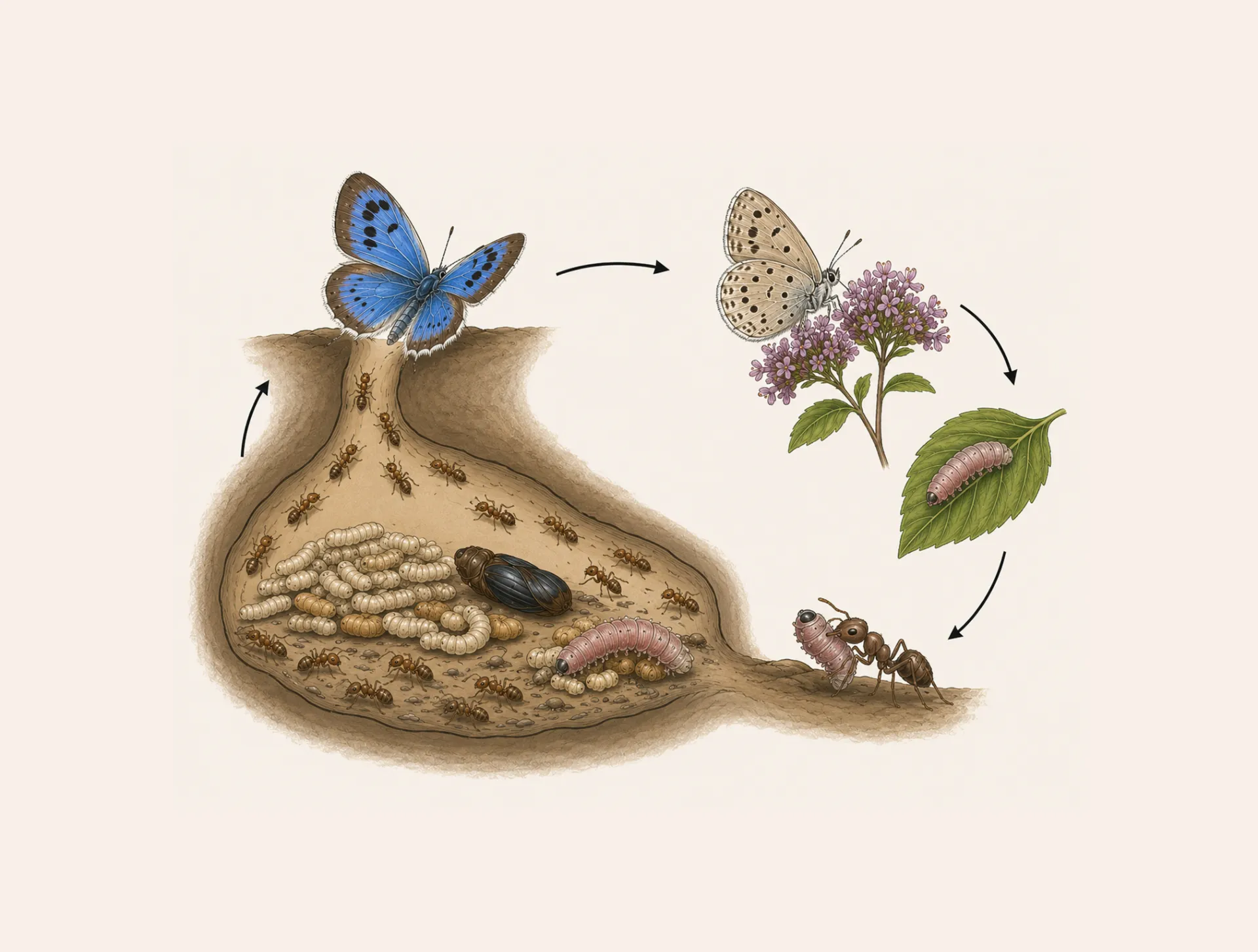
Life cycle of the Large Blue butterfly (Phengaris arion)
Phengaris arion presenta un ciclo de vida único. La oruga en sus tres primeros estadios (L1-L3) se alimenta de orégano (Origanum vulgare) y serpol (Thymus serpyllum). Pero cuando llega al último estadio larvario se tira de la planta y engaña químicamente a las hormigas Myrmica sabuleti, que la llevan a su hormiguero. Allí vive unos 10 meses alimentándose de las larvas y pupas de las hormigas. Completa su pupación y metamorfosis en el hormiguero el cual abandona como una mariposa ya adulta. Es un destacado ejemplo de mimetismo químico, parasitismo y adaptación evolutiva.